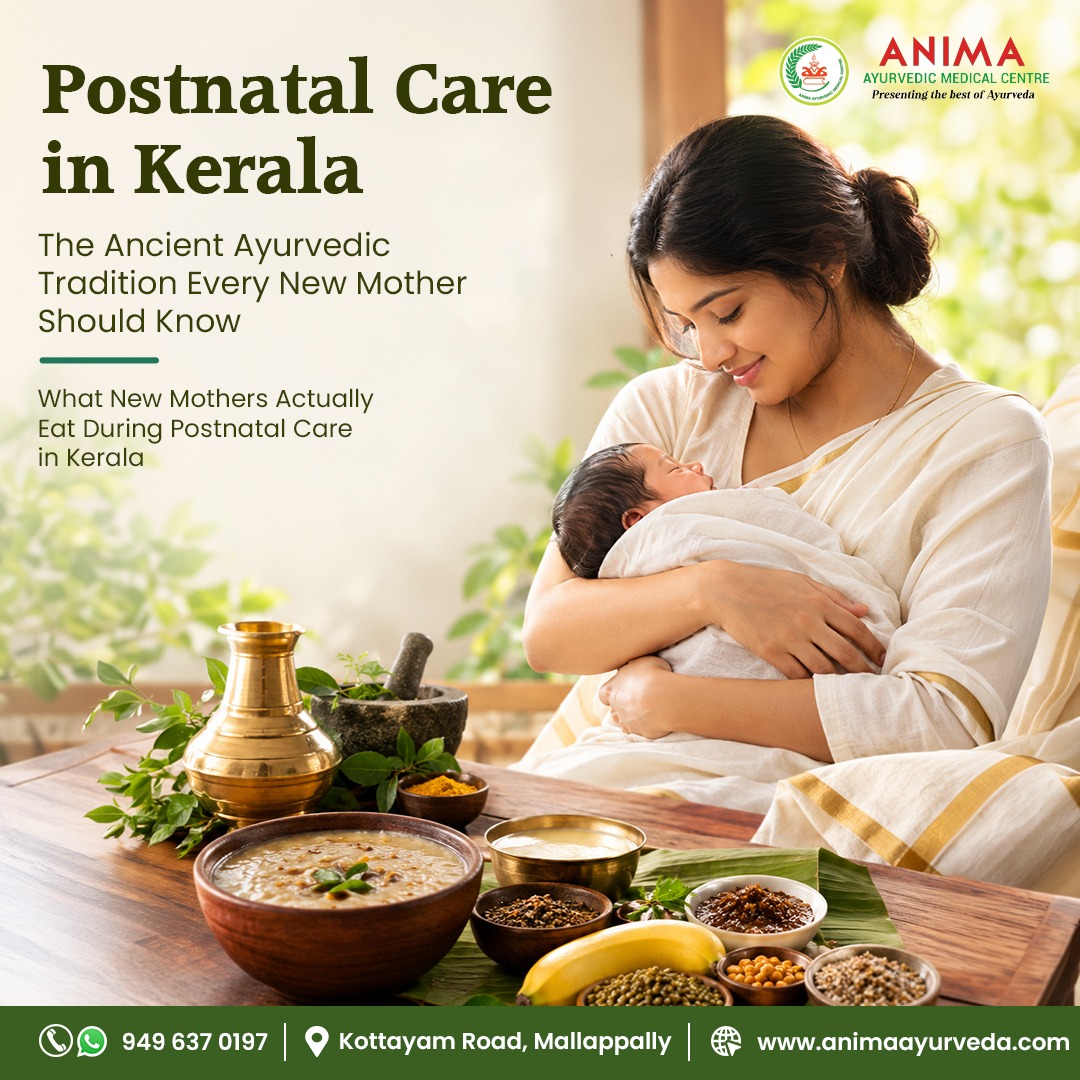
Why Diet Is Treated as Medicine
In Ayurveda, the postpartum period is called Sutika Kala, generally lasting 42 to 45 days after delivery. During this window, a mother's digestive fire, or Agni, is considered weak, and her body is thought to be in a heightened state of Vata — the energy governing movement, which becomes aggravated during childbirth and can show up as dryness, fatigue, and restlessness.
The entire postnatal diet is built to correct this imbalance: warm over cold, soft over raw, easily digestible over heavy. It isn't about restriction for its own sake — it's about giving an overworked digestive system food it can actually process while the body focuses its energy on healing and milk production.
What a Typical Day of Eating Looks Like
While every Ayurvedic practitioner adjusts the diet based on the mother's constitution and type of delivery, most postnatal diets in Kerala follow a similar rhythm:
The first few days focus almost entirely on rice-based preparations like Peya or Manda (thin rice gruel) cooked with ghee and mild spices such as dry ginger. These are chosen specifically because they're gentle on digestion while still replenishing lost nutrients.
Ghee plays an outsized role throughout the recovery period — not as an indulgence, but because it's considered deeply nourishing, supports wound healing, and provides sustained energy without taxing digestion.
As the days progress, the diet gradually expands to include well-cooked vegetables, lightly spiced soups, and easily digestible proteins, always favoring warmth and moisture over anything raw, cold, or heavy.
Herbal support is often layered in as well — ingredients like Shatavari and Ashwagandha are commonly used in Kerala's postnatal tradition to support lactation, replenish energy, and help stabilize hormonal shifts.
What's Generally Avoided
Just as important as what's included is what's deliberately left out during this window:
- Cold foods and drinks, which are believed to slow digestion and aggravate Vata
- Raw salads and dense, hard-to-digest grains
- Spicy or overly oily food that can disturb an already sensitive digestive system
- Refrigerated or reheated leftovers, in favor of freshly prepared meals
None of this is arbitrary — it reflects a consistent underlying principle in Ayurveda: protect a fragile digestive fire until it's strong enough to handle a fuller diet again.
Diet Adjusted for How You Delivered
An often-overlooked detail is that the postnatal diet isn't identical for every mother. After a C-section, for instance, the diet typically includes extra protein and tissue-repairing foods to support wound healing, alongside the same foundational warm, easily digestible principles used for a normal delivery. This kind of personalization is one of the reasons Ayurvedic postnatal programs work with a doctor rather than a fixed meal chart.
Public health research increasingly supports the broader idea that structured maternal nutrition in the weeks after childbirth has a measurable impact on recovery and breastfeeding outcomes — a point reinforced in maternal nutrition guidance published by the National Institutes of Health, which highlights how postpartum dietary needs differ meaningfully from a mother's pre-pregnancy requirements.
Why This Isn't a Diet You Follow Alone
Because the postnatal diet is closely tied to a mother's individual constitution, delivery type, and any complications, it's generally meant to be guided by a trained Ayurvedic physician rather than followed from a generic list. Getting it wrong — too much too soon, or the wrong food group at the wrong stage — can slow recovery rather than support it.
This is where a dedicated Ayurvedic care center makes a real difference. Anima Ayurveda, based in Mallappally, Pathanamthitta, offers Prasava Raksha as part of its structured postnatal care program, combining personalized diet plans with traditional therapies rather than treating diet as an isolated recommendation.
The Bigger Picture
Kerala's approach to postnatal nutrition isn't about following tradition for tradition's sake — it's a carefully sequenced system designed to rebuild a mother's strength from the inside out. For a period of life that asks so much of the body, that kind of intentional, structured care is exactly what recovery is supposed to look like.